
LinkedIn outreach case study
How Monet Analytics Got 49 C-Suite and VP Leaders to Reply on LinkedIn
BizAmps helped Monet Analytics draw interest from 115 people on LinkedIn, including senior leaders at large ad agencies and research firms. A sample report or short video gave buyers an easy first step.
November 2025 to October 2026 · By Akshat Kharbanda
- C-suite and VP-level leaders
- 49
- Interested LinkedIn prospects
- 115
- At companies with 501+ employees
- 35
The 49 senior leaders and 35 people at larger companies are both part of the 115. Interest means the campaign team marked the reply Positive.
“We are a young and demanding company and client… Importantly, we are learning from and with one another. And, we are starting to have some valuable wins. We appreciate your knowledgeable advice, your hard work, your open-mindedness and your partnership.
So, while we will undoubtedly continue to be a demanding client, it’s important you know we are genuinely appreciative of all you do for Monet, how much you care and how we are getting better and better together. Thank you!”
Earlier BizAmps client testimonial
From a two-minute offer to a meeting
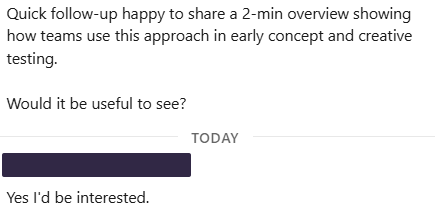
A senior leader at a large research firm heard from the team over several months. The team offered examples of how attention and emotion data could add to the firm’s research, including a sample report and a short video.
The prospect replied with interest and suggested times to meet. The matching meeting was marked done in May 2026.
Why we offered information first
Monet Analytics helps teams see how people respond to ads and concepts before launch. For marketers and researchers, the first question is often practical: what would this tell me about the ad or study I’m working on?
Our read is that information-first outreach fit these buyers because they already judge creative work and research methods by looking at examples. A sample lets them assess the method, imagine where it could fit, and share it with a colleague before booking time. The saved exchanges show buyers asking for material and proposing times. The campaign had no matched test against a meeting-first message, so the effect of the offer on reply rate is unknown.
What the LinkedIn messages sounded like
The examples below are paraphrased from real messages. The opening angle changed with the buyer’s job.
What BizAmps did from research to booking
- Research the buyer
Identify who leads creative, strategy or research. Use their role and the work their team does to choose a use case they can judge.
- Pair the use case with proof
Offer a short PDF, sample report or video. Each format gives the buyer a way to see where Monet could fit into their work.
- Read the reply and choose a next step
Send the requested material, follow a referral to the right person or offer times when the buyer is ready. The tracker records positive, neutral and negative replies, referrals and requests for more information.
- Follow up with a useful reason
Use a different example or a shorter format when it helps the buyer understand the product. One saved follow-up received a clear decline. A short offer can make it easier for someone to give either answer.
- Coordinate the meeting and handoff
Confirm a time, send the calendar invite and follow up before the call. Record the outcome in the meeting tracker so the team can see what happened next.
19 LinkedIn meetings marked done
The meeting tracker recorded 20 meetings marked done during the year. LinkedIn was the recorded source for 19 and email for one.
How we counted
The lead tracker contains 117 positive LinkedIn entries. Two repeats were removed using profile URLs and available identity details. The conservative seniority count includes 19 clearly classified C-suite and 30 VP-level contacts. The separate meeting tracker records 19 LinkedIn-sourced and one email-sourced meeting marked Done in the same period. These totals measure recorded interest and meetings. Sales, ROI and a matched lead-to-meeting conversion rate are unknown.
- 115 interested LinkedIn prospects
- Unique people from the Interested Leads tab with a LinkedIn source, a Positive label and a lead date within the reporting period.
- 49 senior leaders and 35 at larger companies
- Two views of the same 115 people. Seniority comes from recorded job titles. The company-size count uses recorded employee bands starting at 501.
- 19 LinkedIn-sourced meetings marked Done
- Rows in the Meeting List with a demo date in the reporting period and a LinkedIn source. One additional row marked Done was email-sourced.
Reporting period: November 1, 2025 to October 31, 2026. BizAmps ran the campaign and reviewed the tracker. The underlying prospect records are private.
Who would you like to hear back from?
Tell us what you sell and who needs to see it. We’ll help you find a reason for those buyers to reply.
Discuss your LinkedIn outreach strategy