B2B conference outreach · Money20/20 USA 2026
Company reports opened the door.
Follow-up kept it open.
How BizAmps helped EkLine build a campaign around a useful reason to meet, then followed the conversation beyond the booth.
Client: EkLine · By Akshat Kharbanda · Evidence reviewed November 5, 2026
These are separate measures, not a conversion funnel. The 34 records include booth conversations and visits to other exhibitors. They are not 34 audited qualified opportunities. The paid trial is client-confirmed; no revenue or contract value is claimed.
The business goal: meet buyers, then help the next step happen
EkLine wanted qualified sales meetings at Money20/20. Relevant booth visits were a second goal. Follow-up mattered because a first conversation could lead to a different buyer inside the same company.
EkLine helps teams keep product knowledge and developer documentation current. Its work includes finding gaps in how AI tools understand a product and proposing approved fixes to the underlying content. The conference offer made one part of that larger product easy to grasp: a report about the prospect’s own company.
The question was concrete: when buyers or developers ask AI tools about this category, what do those tools understand, miss, or recommend instead?
Original evidence
A useful offer earned a meeting reply
The outreach offered a company benchmark and a short walkthrough. In the exchange below, the prospect moved from that offer to suggesting a time. This is stronger than a connection acceptance, though it does not itself prove attendance.
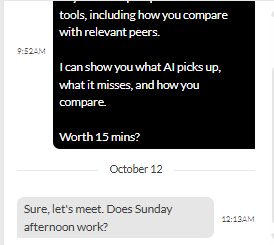
That distinction shaped the operating work: a reply needed a time, an invitation, acceptance, and a clear place to meet. Each step could still fail.
The campaign was a system around the offer
Understand the product and likely buyer
BizAmps used client discovery and research to look for API-led technical products, complex integrations, and roles with a reason to care about product discovery or documentation. A senior title alone did not establish buying fit.
Make the message about the buyer’s outcome
Client feedback pushed messaging away from a list of documentation tasks and toward what the buyer wanted: clearer product understanding, better discovery, and fewer gaps in how tools work with the product. The company report gave the message something specific to offer.
Use email, LinkedIn, and the event app
The team worked across the three channels. Research and message preparation supported outreach, while human review, reply handling, booking, and account ownership kept it grounded in the real conversation. Activity across channels is not a count of unique people.
Turn interest into an accepted slot
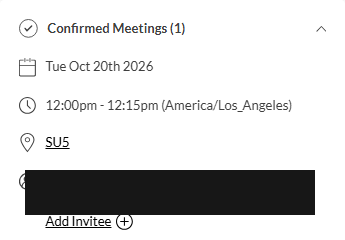
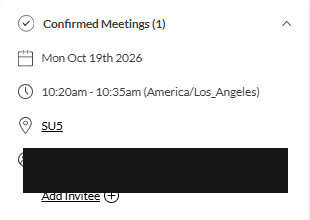
The team used event context, calendar links, and backup invitations. A September planning call explicitly separated people who said yes from people who had actually booked. The screenshot below captures the accepted-slot stage.
Use event notes to find the next person
After a conversation, BizAmps could identify a referred marketing, product, or revenue leader and share the report with that context. The October 22 debrief assigned follow-up to BizAmps until a demo was booked, with Puneet copied when replies arrived. Team coordination helped prevent two people chasing the same account at once.
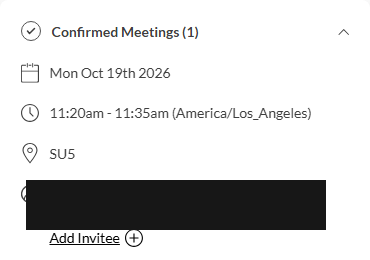
BizAmps supported targeting, outreach, coordination, and follow-up. EkLine supplied the product and reports, handled product conversations and demos, and owned commercial closing.
Three journeys show what happened after interest
From report collection to a documentation problem
A technical-company CEO had a confirmed event slot and came to collect the company report. EkLine’s meeting notes record a discussion about developer documentation, reliance on partners for documentation, and interest in automation. A later meeting was recorded as scheduled.
This shows why the report could be an entry point to EkLine’s wider product. The post-meeting account is an operator’s record, not a verbatim prospect testimonial. A scheduled follow-up is not claimed as completed.
From a product leader to the marketing owner
Another company’s product leader met the team at the booth. Later correspondence in the tracker shows that leader introducing the head of marketing and asking for an explanation of EkLine’s offering. The marketing contact requested a walkthrough and fit discussion. A proposed time remained separate from a confirmed booking.
Interest did not mean immediate progress
A growth leader replied after the event that the material was interesting, but the team had not yet worked through it. That is useful evidence of continued attention. It is not proof of a second meeting or a buying decision.

Commercial progress
One paid trial was confirmed
On November 5, Akshat confirmed that Puneet had told him the previous day that one event contact had started a paid trial. That account also appears in the event meeting notes.
This is a client-confirmed outcome reported through BizAmps. The review did not inspect a contract, invoice, payment receipt, trial start date, or revenue amount. It supports the statement that a paid trial started, with that source limit. It does not establish long-term retention, ROI, or that outreach alone caused the purchase.
What the records support
| Measure | Result | Meaning and limit |
|---|---|---|
| Completed-status event records | 34 | Money20/20 rows with normalized “Meeting Done” labels; 34 distinct company labels. Includes informal and onsite interactions. |
| Main report roster | 147 rows / 146 company labels | 146 rows contain report links. A populated link does not prove delivery, opening, or report quality. |
| Paid trial | 1 client-confirmed | Akshat’s November 5 confirmation citing Puneet. No financial documentation inspected. |
| Qualified opportunities and revenue | Not established | No audited total, contract value, or campaign ROI is presented. |
The earlier draft’s “34 meetings” headline was too broad. The useful fact is the status count, paired with what those records contain. Similarly, the roster name is not a unique-company count.
October client notes estimated roughly 500 mapped contacts across the report group and 30 companies requesting reports. Later working tabs contain additions and different populations. Those historical estimates are not presented as current audited totals or used to calculate conversion rates.
What worked, and what we would change
Keep the useful offer and the account context
Company-specific findings gave prospects a reason to engage. In individual records, those findings led to report collection, discussion of a product problem, and introductions to colleagues. These examples support the mechanism; there was no controlled test proving an uplift over a generic invitation.
Have the promised report ready
Some meeting notes say visitors arrived after being offered a report, but it had not yet been generated. Next time, report readiness should be checked before outreach promises availability. Requests for a new report should be described honestly.
Measure buyer fit and next steps more clearly
Some visitors were interested but did not own the problem. Track who attended, which need was discussed, who owns the decision, and whether a follow-up was merely proposed, booked, or held. A booth conversation is useful, but its business value depends on what happens next.
Audit channel results before ranking them
The weekly sheet includes mixed event scope and an email open-rate aggregate above 100%. Some prospect replies are duplicated in the working records. We therefore do not publish a unique-response funnel or rank channels using those totals. Email delivery concerns in later notes are operating concerns, not a proven cause of weak results.
Evidence, definitions, and limits
This is a first-party case study by BizAmps, which worked on the campaign. It is not an independent audit. Sources include the campaign tracker, original linked screenshots, September 28 and October 22 call transcripts, later client notes, and Akshat’s November 5 paid-trial confirmation. Sources were reviewed on November 5, 2026; post-event results are included through that review date where supported.
“Accepted” means an invitation shows acceptance. “Meeting Done” means the tracker carries that status. “Qualified” would require both buyer fit and a relevant commercial need; the tracker labels alone do not establish that. “Booked” and “held” remain separate.
Original screenshots are cropped and permanently redacted. Captions describe the evidence stage. Names, company identities, and private links are withheld. Internal meeting notes are paraphrased as operator observations. No screenshot or quote implies an endorsement.
A private claim register retains source rows, screenshot links, definitions, and corrections. Public detail covers the operating process; private prompts, routing rules, lead data, and client communications remain private. AI-assisted review checks consistency and privacy; it does not turn this into independent assurance.
For another conference example, see the Shivaami AI4 case study. For service scope and fit, read the conference campaign guide.